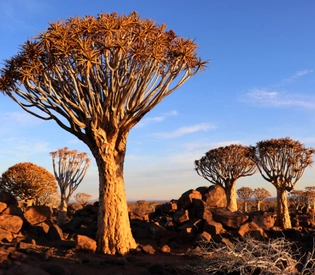
The 12-Day Namibia Adventure by Great Explorations Namibia is an adventurous self-drive journey for independent travelers, blending starry camping nights.. Starting in Windhoek, this seamless circuit takes you through the stark red dunes of Sossusvlei, the cool Atlantic coastal town of Swakopmund, the granite peaks of Spitzkoppe, and the ancient rock art of Damaraland. The trip finishes with wildlife safaris in Etosha National Park and big cat conservation experiences at the Okonjima Nature Reserve before returning to the capital.
Upon touching down in Namibia’s capital, you collect your fully equipped self-drive rental vehicle to start your journey. You then make your way to your accommodation, a shaded canvas-tent base situated within short walking distance of local urban cafés and dining spots. Overnight: Urban Camp (Windhoek).
Leaving Windhoek behind, you drive southwest through the Khomas Highlands and descend into the open desert plains. The landscape transitions into deep red sands as you reach the edges of the Namib Desert by late afternoon. Overnight: Sesriem Oshana Campsite (Sesriem / Sossusvlei).
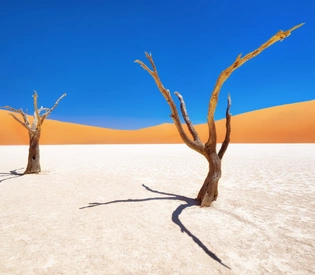
You depart early in the morning to witness dawn breaking over the towering dunes of Sossusvlei and Dune 45. The day is spent exploring the white clay pan and ancient acacia trees of Deadvlei, followed by a visit to the water-carved Sesriem Canyon. Overnight: Sesriem Oshana Campsite (Sesriem / Sossusvlei).
Your drive north takes you through the Gaub and Kuiseb rock passes, with a stop for pie and coffee at the desert outpost of Solitaire. Continuing onward, the warm desert air shifts to cool coastal breezes as you arrive at the Atlantic town of Swakopmund. Overnight: Desert Jackal Guesthouse (Swakopmund)
You spend a full day exploring Swakopmund and its surroundings at your own pace. Optional activities include desert living tours, quad biking, sandboarding, local market visits, or taking a marine cruise out of nearby Walvis Bay. Overnight: Desert Jackal Guesthouse (Swakopmund)
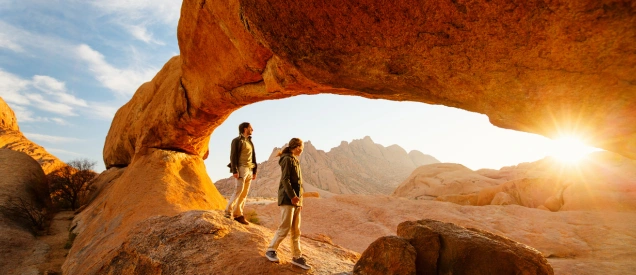
Heading back inland into Damaraland, you reach the massive granite inselbergs of Spitzkoppe. The afternoon and evening are spent exploring the natural arch formations, hidden cave paintings, and rock-strewn desert landscapes under clear skies. Overnight: Spitzkoppe Campsite (Spitzkoppe)
Continuing north through Damaraland, you visit the ancient San rock engravings at UNESCO-listed Twyfelfontein, alongside neighboring geological sights such as the Organ Pipes and Burnt Mountain. You then transition from camping to tented accommodation. Overnight: Mowani / Camp Isa (Damaraland)
You travel northeast from Damaraland and enter the southern Andersson Gate of Etosha National Park. After setting up base inside the park, your evening is spent beside a floodlit waterhole frequented by resident nocturnal wildlife. Overnight: Okaukuejo Resort Campsite (Etosha National Park)
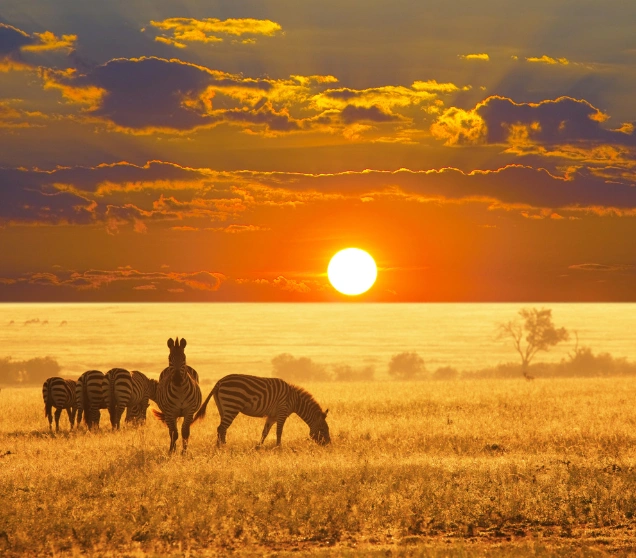
The entire day is dedicated to self-drive game viewing around the vast Etosha Salt Pan. You navigate gravel routes between various waterholes to observe herds of plains game, big cats, rhinos, and bird species. Overnight: Okaukuejo Resort Campsite (Etosha National Park)
You traverse Etosha from west to east while game-viewing along the way, exiting through the Von Lindequist Gate. Your stay continues in the adjacent private Onguma Reserve, offering quieter wilderness surroundings next to the national park border. Overnight: Onguma Tamboti Campsite (Onguma Private Reserve)
Leaving the safari trails of Etosha behind, you drive south to Okonjima Nature Reserve and settle into camp for a dedicated leisure day. You can spend the entire afternoon unwinding at your campsite under the acacia trees, reading, enjoying the pool facilities, or enjoying quiet views of the surrounding wild bushveld at your own unhurried pace. Overnight: Okonjima Okomboro Campsite.
On the final day, you complete the drive back to Windhoek, return your rental vehicle, and conclude your self-drive safari tour. Overnight: Not applicable (Tour ends in Windhoek)
Here are 5 frequently asked questions covering essential travel logistics, weather, and driving tips for this self-drive Namibia itinerary.
Frequently Asked Questions
The best time to travel is during the dry winter season from May to October. During these months, daytime temperatures are mild (20°C–25°C), rainfall is virtually non-existent, and wildlife viewing in Etosha National Park is at its peak as animals gather around permanent waterholes. Note: Desert and inland night temperatures can drop sharply during June and July, sometimes near freezing, so warm layers for camping are essential.
A 4x4 vehicle (such as a Toyota Hilux or Land Cruiser) equipped for camping is strongly recommended. While main highways between major towns are paved (tarred), the majority of this route including drives through Sossusvlei, Damaraland, Spitzkoppe, and inside Etosha consists of gravel, dirt, and deep sand roads. High clearance and four-wheel drive provide necessary traction, ground clearance, and safety.
Yes, Namibia is considered one of the safest and most accessible self-drive destinations in Africa. Main routes are well-marked, and crime rates in rural areas are very low. The primary safety precautions involve driving dynamics: keep to lower speeds on gravel roads to maintain traction, avoid driving after dark due to roaming wildlife on unlit roads, and always carry extra drinking water and a secondary spare tire.
Yes, advance booking is critical, especially if traveling between June and October. Key locations like Sesriem Oshana (which allows early access into Sossusvlei for sunrise) and Okaukuejo inside Etosha National Park fill up months ahead. Park entry permits for Sossusvlei and Etosha can be paid directly at the park gates upon arrival, but accommodation slots must be secured beforehand.
The southern and coastal sections of the itinerary (Sossusvlei, Swakopmund, and Spitzkoppe) carry negligible to no malaria risk. However, northern regions including Damaraland and Etosha National Park are considered moderate-risk areas, particularly during or right after the rainy season (November to April). Consult a travel health clinic before your trip regarding malaria prophylaxis, and carry effective mosquito repellent for evening game drives.